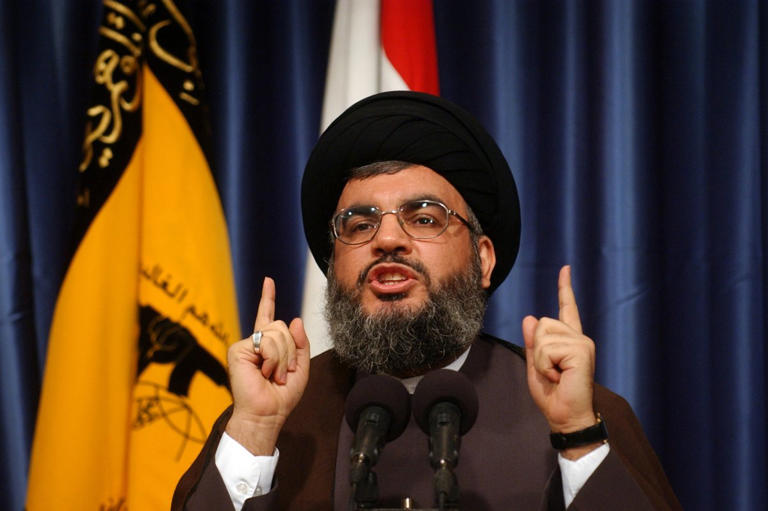
The recent Israeli airstrike that killed Hezbollah’s leader, Hassan Nasrallah, has sparked significant media coverage. Yet, the portrayal of Nasrallah in much of the Western media is deeply problematic. Outlets describe him as a “political figure” or a “major military leader,” framing his legacy as if he were just another regional politician. This dangerously softens the reality of who Nasrallah truly was: the leader of the world’s largest, most sophisticated terrorist organization.
Hezbollah has been responsible for decades of terror, not just in the Middle East, but globally. It has been directly linked to attacks on Americans, Israelis, and civilians around the world. The group’s military arm operates with brutal efficiency, often under the guise of “resistance,” but it remains a terrorist entity. Countries like the United States, the UK, and others have long recognized Hezbollah as such. Yet, some media outlets still cloak Nasrallah in the language of a legitimate political actor.
Nasrallah’s death, while a significant blow to Hezbollah, is not the end of the organization. But the media’s failure to accurately reflect his role risks obscuring the true nature of Hezbollah. Under Nasrallah’s leadership since 1992, Hezbollah expanded its paramilitary capabilities and embedded itself within Lebanon’s political system. This dual role as both a political entity and a terrorist group has been used by Nasrallah and his followers to legitimize their actions, even as they destabilize the region through violence, including aiding and abetting Iran’s agenda.
The soft-pedaling of Nasrallah’s legacy minimizes the human cost of Hezbollah’s terrorism. From orchestrating the 1983 Beirut barracks bombing that killed 241 U.S. service members to the 2006 war with Israel that led to widespread civilian casualties, Nasrallah has orchestrated violence on a massive scale. More recently, Hezbollah’s entanglement in the Syrian Civil War has caused further devastation.
So why does the media often resort to the language of politics when discussing Nasrallah? Perhaps it’s due to Hezbollah’s complex positioning within Lebanon, where it wields significant political influence. But no amount of political clout can erase the fact that Hezbollah is a terrorist organization—one that Nasrallah has led with calculated brutality for more than three decades. The media must stop giving him the veneer of respectability that comes with being labeled a “politician” or “influential figure.”
When we soften the language around terrorism, we distort the truth. Nasrallah wasn’t just an “influential figure”; he was a terrorist mastermind who used violence to achieve his aims. Describing him as anything less is a disservice to the countless victims of Hezbollah’s terrorism and to the global fight against extremism.
As we watch the Middle East simmer with tension, particularly after this strike, it is vital to call out terrorism for what it is. Nasrallah’s death was not just the removal of a political leader, but the elimination of the head of a global terrorist network. The media must recognize this and adjust its narrative accordingly—because no political title can whitewash terrorism.
 RibotskyInstitute.com
Leave a comment