As October 7, 2024, looms right around the corner, we are reminded of the atrocities that occurred one year ago and the citizens of multiple countries that still are in captivity by terrorists. Today is Rosh Hashana, the Jewish New Year, and in reflection on the past year’s events we at The Ribotsky Institute, think that as history is destined to repeat itself, maybe some of the global actors should rethink their strategy, as what they are trying now, has been done before.
Throughout history, powerful forces have attempted to dominate others through a combination of religious zeal, military might, and ideological superiority. One of the most profound examples of such attempts was the Crusades, a series of religious wars initiated by the Catholic Church to reclaim Jerusalem and other sacred territories. However, the Church’s ambitions faltered, in part because they underestimated the strength and resilience of the indigenous populations who were united in their defense of their homeland.
Fast forward to today, and a similar miscalculation is evident in the actions of Hamas, a militant group backed by Iran. Just as the Crusaders underestimated the resolve of Muslim forces defending their homeland, Iran and its proxies—Hamas and Hezbollah—have underestimated the ironclad determination of Israel to defend its right to exist. In both cases, the attackers underestimated the deep, unshakable bond between a people and their land, leading to their failure.
The Crusades: Underestimating the Power of Homeland Defense
The Crusades, spanning from 1096 to 1291, were driven by religious fervor, with the Catholic Church framing the wars as a divine mission to reclaim the Holy Land from Muslim control. Crusaders were promised spiritual rewards, and armies from across Europe mobilized to conquer territories sacred to Christianity. However, what the Church and European rulers failed to recognize was the deep connection between the indigenous Muslim populations and their homeland.
Muslims who lived in the Holy Land did not see themselves as part of an abstract religious war; they saw themselves as defenders of their homes, their families, and their way of life. Leaders like Saladin were able to unite various factions under a common cause: defending their homeland from foreign invaders. The Crusaders, despite initial victories, could not maintain control of the region because they faced a population whose resolve to defend their land outweighed the Crusaders’ desire for conquest.
This underestimation of the power of a people fighting for their homeland was one of the key reasons the Crusades ultimately failed. The Church had miscalculated the strength that comes from defending one’s home—a miscalculation that resonates in the modern era.
Hamas and Iran’s Proxy War: Misreading Israel’s Resolve
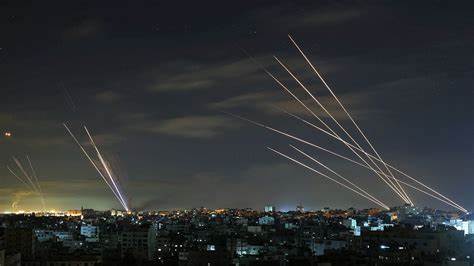
In today’s Middle East, we see a similar miscalculation playing out, though in a vastly different context. Hamas, a militant group that governs the Gaza Strip, launched a brutal and unprecedented attack on Israel on October 7, 2023, slaughtering civilians, committing atrocities, and kidnapping hostages. Hamas, like Hezbollah, operates as a proxy for Iran, which provides financial and military support to these groups as part of its broader strategy to expand influence in the region and destabilize Israel.
Iran, Hamas, and Hezbollah have all underestimated one key factor: Israel’s unwavering resolve to defend its right to exist. Much like the Crusaders, they fail to fully grasp the profound strength that comes from fighting for one’s homeland. Israel, since its founding in 1948, has faced existential threats from its neighbors, and each time, it has emerged stronger. The Jewish people’s connection to the land of Israel is rooted in thousands of years of history, faith, and culture—creating an unbreakable bond that drives their commitment to survival.
Israel is not just fighting a military battle; it is fighting for the right to exist as a sovereign nation in its ancestral homeland. Every attack against Israel, whether through terrorism, missile strikes, or invasion, reinforces the resolve of its people. Israel’s defenders are not merely soldiers—they are citizens, fathers, mothers, and children who have a personal stake in the survival of their nation. Much like the Muslim forces during the Crusades, the people of Israel are united by a common purpose: protecting their homeland.
The Role of External Forces: Then and Now
During the Crusades, the Catholic Church was the external force driving the conflict, with the Pope and European kings rallying soldiers to fight in foreign lands. These soldiers, while often motivated by promises of land and wealth, were ultimately fighting for a cause dictated by an institution far removed from the realities of life in the Holy Land.
Today, Iran plays a similar role in its support of Hamas and Hezbollah. Iran’s goals are not religious, but geopolitical—it seeks to assert itself as a regional power, and part of that strategy involves undermining Israel and the hope of the eradication of Israel completely. By backing Hamas and Hezbollah, Iran seeks to use these groups as tools to destabilize Israel and challenge U.S. influence in the region.
However, just as the Catholic Church’s plans in the Crusades were thwarted by the resolve of local populations, Iran’s strategy is similarly doomed to fail because it underestimates the resilience of the Israeli people. Israel’s military capabilities are formidable, but more importantly, its population is deeply committed to defending the country at all costs. The constant threat of annihilation has forged a national identity that revolves around survival, resilience, and determination.
The Unstoppable Force of Homeland Defense
One of the most powerful lessons from both the Crusades and the current Middle East conflict is that a people united in defense of their homeland is an unstoppable force. The Crusaders, despite their initial successes, were eventually driven out because the Muslim populations were fighting for more than just religion—they were fighting for their homes and their way of life.
Similarly, Hamas and Hezbollah’s attempts to destroy Israel will ultimately fail because Israel is not just a state; it is a homeland for millions of Jews who have returned after centuries of diaspora. The modern Jewish state is deeply rooted in a sense of history, identity, and survival. Every missile launched by Hamas, every terrorist attack, only strengthens the collective resolve of Israelis to ensure that their nation endures.
Conclusion: Miscalculating the Resolve of a People
The Catholic Church’s failure in the Crusades was, at its core, a failure to understand the strength that comes from fighting for one’s homeland. Today, Iran, Hamas, and Hezbollah make the same miscalculation in their efforts to destroy Israel. They see Israel as a political entity that can be toppled, but they fail to recognize the deep historical and emotional connection that binds Israelis to their land. Iran also misunderstands that even though the United States will make it look like it is assisting limitedly, in an actual war, we have no choice but to act and aid our ally Israel as we have shown in recent days that we will.
History has shown that external forces, whether they are religious crusaders or modern-day proxies, cannot defeat a people united in defense of their homeland. Just as the Crusaders were ultimately driven out of the Holy Land, so too will Hamas and Hezbollah fail in their attempts to destroy Israel. The strength that comes from defending one’s home is, and always will be, an unstoppable force. Israel’s resolve to exist, to defend its people, and to thrive in the face of adversity is not something that can be underestimated—or eradicated.
 RibotskyInstitute.com
Leave a comment