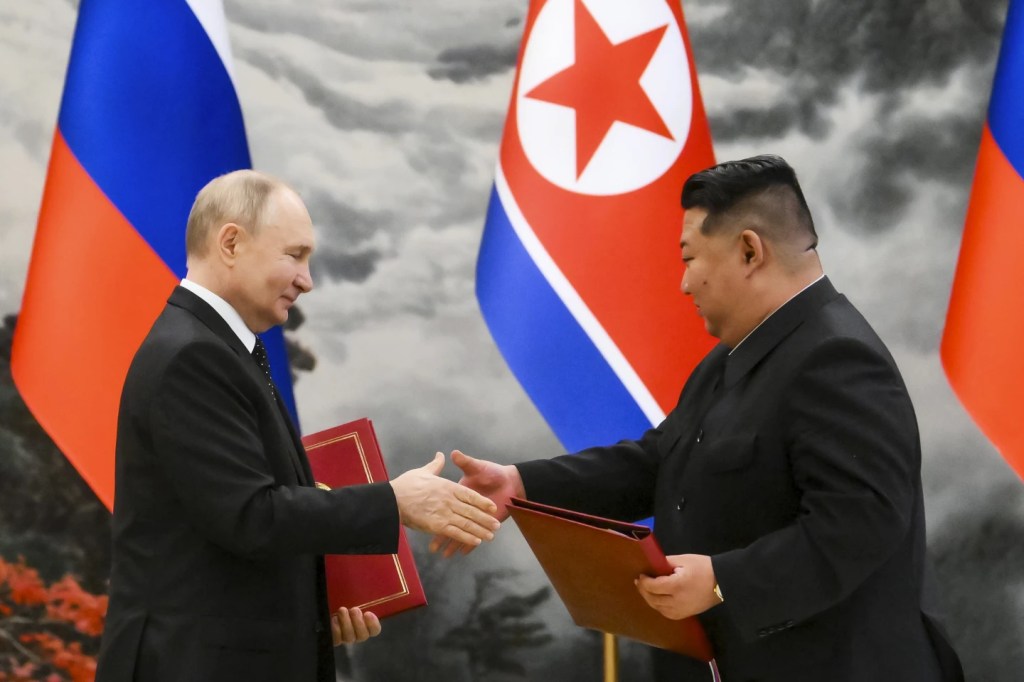
The recent deployment of North Korean troops to Russia marks a dramatic shift in global geopolitics, signaling the formation of a new and dangerous alliance between two authoritarian regimes. What began as covert support has now evolved into direct military cooperation, with North Korean soldiers reportedly being trained for deployment to Ukraine. This unprecedented move not only deepens the relationship between Pyongyang and Moscow but also injects fresh instability into an already fragile world, with the ongoing war in the Middle East adding another layer of complexity to the global landscape.
Historically, North Korea has remained militarily isolated, using its large army primarily for domestic control and deterrence. However, its decision to send troops to Russia for direct involvement in a foreign war marks a major policy shift. This is not just about aiding Russia in Ukraine; it signals the growing alignment of authoritarian states willing to challenge Western dominance openly. As the world watches, a new axis of power is emerging.
For China, North Korea’s new role presents both opportunities and risks. Beijing has long maintained a complicated relationship with Pyongyang, seeking to balance its influence over North Korea while avoiding direct confrontation with the West. The deepening military cooperation between North Korea and Russia could distract the U.S. and its allies, allowing China to quietly expand its influence in East Asia. However, North Korea’s increased visibility as a military actor may also force China into a more precarious position, as its ties to Russia and North Korea are under greater scrutiny.
Meanwhile, Ukraine faces an even more difficult battle. While North Korean troops may lack experience, their presence provides Russia with much-needed manpower, potentially prolonging a war that has already drained Ukraine’s resources. With the world’s attention divided between Ukraine and the escalating conflict in the Middle East, Ukraine could struggle to maintain the level of international support it needs to fend off Russia’s renewed offensive.
This growing partnership between North Korea and Russia highlights a broader, more troubling trend—the consolidation of authoritarian regimes in opposition to Western powers. The involvement of North Korean troops, coupled with the global focus on the Middle East, raises the stakes for the international community. The world is now facing the prospect of multiple interconnected crises, with authoritarian states emboldened to act more aggressively as the West scrambles to respond on multiple fronts.
The West must recognize that these conflicts are no longer isolated events. The alliance between North Korea and Russia is not just a regional issue—it is a global one. The international community must act decisively to counter this growing axis of power or risk a broader destabilization that could engulf multiple regions.
As North Korea joins Russia on the global stage, the world finds itself on edge, confronting a new and dangerous alignment of authoritarianism. The stakes have never been higher, and the international response must be swift and coordinated to address the evolving threats posed by this new axis.
 RibotskyInstitute.com
Leave a comment