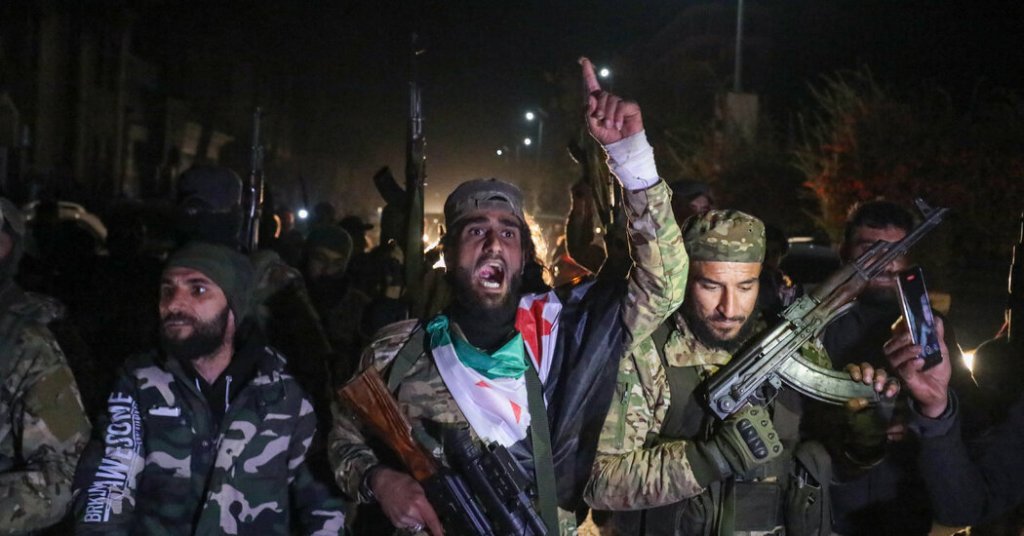
The sudden fall of Syrian President Bashar al-Assad’s regime, toppled by jihadi militants, has reverberated across the globe, igniting celebration, trepidation, and widespread geopolitical recalculations. The collapse marks not only a pivotal moment for Syria and the Middle East but also a significant failure for Russia, whose steadfast support for Assad over the past decade ultimately proved futile.
While expatriate Syrians and residents across the region rejoiced at the end of a brutal authoritarian regime, concerns about regional instability and the diminishing influence of Russia and its allies dominated discussions in diplomatic circles. Assad’s ouster is also a dramatic turning point for key Middle Eastern nations, as alliances shift and power vacuums emerge.
Celebration in the Middle East
For many Syrians, Assad’s ouster symbolized the end of a 14-year nightmare of civil war. Refugees streamed toward the Syrian border, hopeful about rebuilding their lives after years of displacement.
“Anything is better than Bashar,” said Sami Abdel-Latif, a Syrian refugee in Lebanon preparing to return home. “This is a feeling we’ve been waiting 14 years for,” echoed Malak Matar, another refugee heading back to Damascus.
In neighboring countries like Jordan and Lebanon, citizens hailed the fall of Assad as a victory against tyranny. However, others expressed caution, fearing the power vacuum might lead to further conflict.
“We saw this happen in Libya, Tunisia, Yemen, and Sudan,” said Saeed Sawy, an Egyptian engineer. “Tyrants fall, then factions fight for power, and another civil war starts.”
Russia’s Strategic Loss
For Russia, Assad’s ouster represents a profound geopolitical defeat. Moscow invested heavily in propping up his regime, providing military and financial support to secure its foothold in the Middle East. With Assad gone, Russia risks losing its naval base in Tartus and its broader influence in the region.
The Kremlin, which had backed Assad unconditionally, reacted with “extreme concern.” Analysts view the fall of Assad as a significant blow to Russian President Vladimir Putin’s broader ambitions, particularly at a time when Russia is deeply entangled in its war in Ukraine.
Ukraine’s Foreign Minister Andrii Sybiha framed Assad’s downfall as emblematic of the Kremlin’s unreliability: “Putin always betrays those who rely on him,” he tweeted.
A Transforming Middle East
The collapse of Assad’s regime is a watershed moment for Middle Eastern geopolitics, drastically altering the strategic landscape for key players:
- Iran faces a significant loss, as Syria was a critical conduit for supplying Hezbollah and expanding its regional influence. Tehran must now recalibrate its approach to maintain its foothold in the region.
- Turkey emerges as a major beneficiary, with increased leverage over Syria’s future. Ankara is expected to push for greater influence in northern Syria while managing its complex relationships with Russia and Iran.
- Israel sees both opportunities and risks. The weakening of Iranian and Hezbollah forces in Syria reduces immediate threats, but the rise of militant groups creates new security challenges.
- Saudi Arabia and Qatar view Assad’s fall as a win against Iranian dominance, offering a chance to shape Syria’s reconstruction and political future in alignment with their strategic interests.
- Lebanon faces relief from a reduced Hezbollah presence but bracing for the strain of returning refugees and potential instability along its border.
This realignment of power underscores the delicate balance required to manage the aftermath of Assad’s fall, with each country jockeying to secure its interests in a rapidly evolving landscape.
World Leaders React
Across Europe, where the Syrian refugee crisis has long shaped domestic policies, reactions were mixed. Expatriate Syrians celebrated in cities like Paris, London, and Athens, while European leaders emphasized the need for stability.
“The end of Assad’s dictatorship is a long-awaited development,” said Kaja Kallas, the EU’s foreign policy chief. “Our priority is ensuring security in the region.” German Chancellor Olaf Scholz called for swift restoration of law and order, while France and the UK urged humanitarian protections and rapid aid deployment.
In the United States, reactions highlighted divisions in approach. President Joe Biden convened his national security team to assess the situation, while President-elect Donald Trump reiterated his stance of non-involvement, calling Syria “not our fight”.
The U.S. maintains a limited military presence in Syria to counter potential resurgences of the Islamic State group. Washington’s next moves could shape Syria’s trajectory in the weeks and months ahead.
As Syrians celebrate the end of a dictatorship that claimed hundreds of thousands of lives, the challenges of rebuilding loom large. Assad’s downfall leaves a fragmented opposition and a delicate balance of international interests, particularly with Russia and Iran grappling with diminished influence.
The global response will be critical in determining whether Syria’s next chapter leads to stability or further strife. For Russia, however, Assad’s fall is an undeniable blow to its ambitions in the Middle East, underscoring the fragility of its regional alliances and the limits of its power.
 RibotskyInstitute.com
Leave a comment