On April 3, 2025, the stock market suffered its worst one-day drop in years. The Dow Jones Industrial Average fell 1,679 points, closing at 40,545.93, a 4% decline. The S&P 500 lost 4.8%, and the Nasdaq Composite plummeted 6%, shedding over 1,050 points. Across the board, Wall Street melted down—and the blame was laid squarely on one thing:
President Donald Trump’s announcement of a 60% tariff on Chinese goods.
The reaction from investors, analysts, and media talking heads was immediate—and predictable. Words like “catastrophic,” “reckless,” and “protectionist” were thrown around with little nuance and less insight. But let’s be clear about what actually happened.
This wasn’t a market reacting to bad policy. This was a market reacting to reality finally catching up.
We’ve Been Living in a Fantasy Economy
For decades, the U.S. economy has relied on a simple formula: ship production overseas, keep labor cheap, keep goods flowing in, and keep consumers happy with low prices. Wall Street loved it. Big business profited from it. Politicians enabled it.
But what did we lose?
We lost factories. We lost leverage. We lost the ability to make the essentials—semiconductors, antibiotics, steel—without depending on foreign nations, many of whom don’t like us very much.
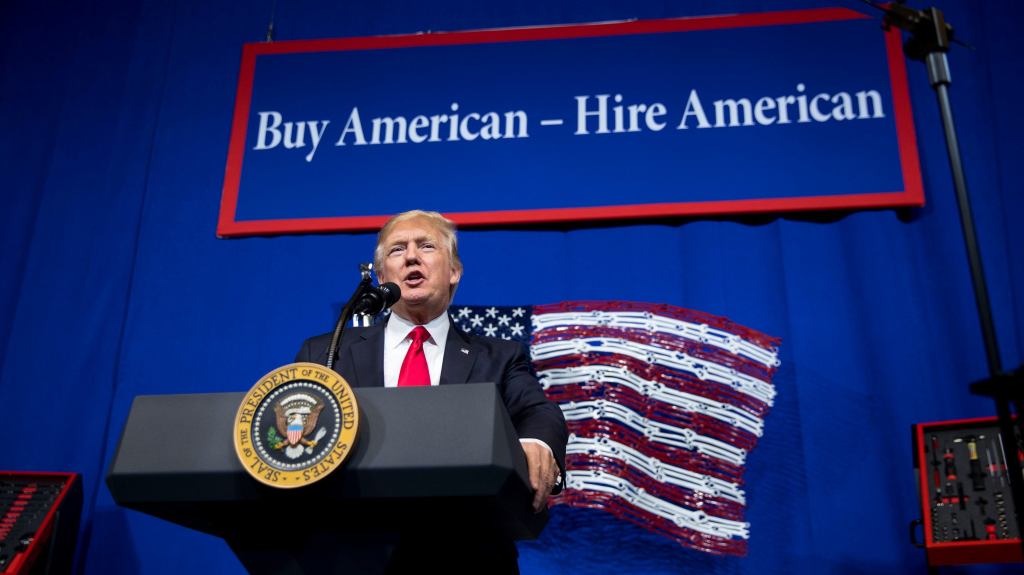
What President Trump’s tariff announcement signals is the end of that era. It’s not a punishment. It’s a pivot. A correction. A hard but necessary step toward restoring economic independence. And Wall Street doesn’t like it because it’s not built to thrive in a reality-based economy.
The Real Purpose of the Tariffs
Let’s stop pretending this is about economic nationalism or “Trump being Trump.” These tariffs are a direct challenge to the pricing assumptions that undergird global trade. They force companies to ask a basic question:
Is it still cheaper to make this in China once we factor in a 60% import tariff? If the answer is no, companies will begin reshoring production. And that’s exactly the point.
Tariffs like these are not just taxes. They’re tools. They’re designed to change corporate behavior, shift supply chains, and rebuild domestic capacity. They don’t isolate America from the world—they reconnect us to our own industrial base.
Wall Street’s Tantrum Is Proof That the Policy Is Working
The market reaction was visceral because the shift is real. This isn’t like a Fed rate hike or a disappointing earnings report. This is structural. Wall Street isn’t panicking because tariffs are dumb. It’s panicking because they’re smart—and they threaten a decades-long system that made it easier to squeeze profits from outsourced labor than from American productivity.
If your business model only works when you can exploit cheap labor abroad and ship it home without penalty, that’s not free-market capitalism. That’s dependency. That’s fragility. That’s the illusion being shattered now.
Yes, It’s Going to Hurt—Short Term
There’s no sugarcoating this: prices on imported goods will rise. Businesses will face disruption. There will be lobbying, lawsuits, and lots of complaining. But the truth is, the alternative is worse. Continuing to depend on adversarial countries for critical components and raw materials is not just foolish—it’s dangerous. We learned that in 2020, and apparently, we’ve already forgotten. Trump’s policy may cause turbulence now. But it’s not chaos—it’s correction. This is the economy waking up from a 30-year dream and realizing it has to get back to work.
The Real Risk Is Staying the Same
The irony is that while markets scream about risk, the riskiest thing we can do is maintain the status quo. If another geopolitical shock happens—say, China invades Taiwan or cuts off exports—what happens to America then? Do we scramble again to secure microchips? Do we discover that we still don’t have domestic manufacturing for antibiotics? Do we watch inflation spike because we’ve outsourced everything that matters?
That’s not a future we can afford.
A Stronger, More Honest Economy
President Trump’s tariff policy is unpopular with investors because it demands something Wall Street hates: accountability. It asks U.S. companies to produce, not just import. To hire Americans, not just arbitrage foreign wages. To take the long view instead of chasing next quarter’s earnings call. Yes, the market dropped. But maybe it needed to. Maybe the bubble needed to pop so something real can grow in its place.
This isn’t economic war. This is economic recovery—and it starts with a little discomfort and a lot of honesty. Call it what you want. Panic. Correction. Shock.
But here’s the truth: it’s time.
And if you’re upset that the economy might start working for Main Street instead of Wall Street, maybe you’re not upset about the tariffs—maybe you’re upset that the game is finally changing.
 RibotskyInstitute.com
Leave a comment