By Corey Ribotsky
Every election cycle follows the same script. Pollsters release dramatic numbers, the media repeats them as gospel, and the public is told the race is already over. Then, as always, the numbers collapse on Election Day — and the people who were sure they knew the outcome pretend they never said it.
Since 2016, polling has been consistently wrong — in presidential races, congressional races, even local primaries. Yet the same pundits who misread Trump’s coalition, overcounted Biden’s margins, and missed entire voter blocs are now declaring Zohran Mamdani the inevitable next mayor of New York City.
But this race isn’t about inevitability. It’s about how a fractured field and lazy polling create the illusion of a mandate — and how Mamdani’s campaign is built to exploit exactly that.
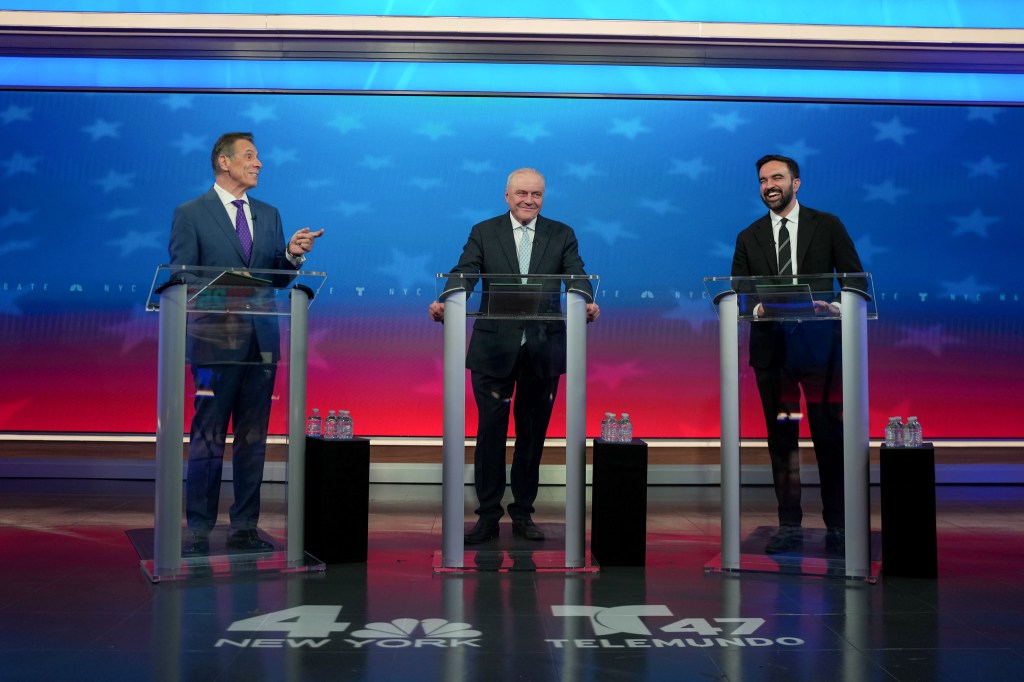
The 2025 mayoral contest isn’t Mamdani versus Cuomo. It’s Mamdani versus Cuomo and Sliwa — and that distinction is everything.
Andrew Cuomo pulls from moderate Democrats, union members, and pragmatic voters who still see competence as a governing virtue. Curtis Sliwa appeals to conservatives and independents who distrust both parties but want order and accountability. Together, those two blocs represent a majority of the city’s electorate — but they are divided against each other.
Mamdani, meanwhile, commands a disciplined progressive base concentrated in a few borough pockets, unionized public-sector workers, and activists aligned with Democratic Socialists of America. He knows that if Cuomo and Sliwa split the opposition, he doesn’t need to expand his appeal — he just needs to hold his third of the electorate and let the math do the rest.
Mamdani’s team understands turnout mechanics better than anyone in the race. They know that New York City primaries often draw fewer than a million voters out of more than four million registered Democrats. That’s not democracy at full strength — that’s opportunity for those who can mobilize a small, loyal base.
By keeping his message sharply ideological — housing guarantees, municipal socialism, debt forgiveness — Mamdani excites a narrow but fervent bloc. He has no incentive to moderate because the fractured field means he doesn’t have to.
Every time Sliwa stays on the ballot and insists on his own lane, he drains just enough votes from Cuomo to prevent consolidation. The media’s obsession with the polling topline — showing Mamdani “ahead” — freezes donors and discourages the center from uniting. That, in turn, keeps turnout among moderates low, which only amplifies the influence of Mamdani’s smaller, better-organized base.
It’s not just electoral arithmetic; it’s agenda protection. The fewer centrist votes cast, the easier it becomes for a hard-left platform to look like a citywide mandate. Mamdani wins not by persuasion, but by attrition.
The polling industry functions as the unwitting accomplice. Surveys of “likely voters” fail to capture the millions of New Yorkers who rarely participate in primaries. Undecided voters — often 10 to 15 percent of the electorate — are treated as statistical noise rather than the deciding factor they are.
Each poll showing Mamdani with a steady lead reinforces the notion that the race is over. That perception depresses opposition turnout even further. In other words, polls don’t just predict his win — they help create it.
For Mamdani’s campaign, this feedback loop is priceless. He can claim growing public support while knowing his base’s share of the total electorate might never exceed 30 percent. As long as the polls keep repeating that he’s ahead, no one notices that most of the city never voted for him.
What’s most troubling isn’t just that the polls get it wrong. It’s that no matter how many people have pulled the emergency rip cord, the Democratic Socialist Party has carved out a foothold in the most diverse and populated city in America — a city that once prided itself on pragmatism, not ideology.
They push sweeping, utopian concepts that have no realistic chance of being implemented, yet they manage to ignite a passionate minority simply because what they’re offering sounds different from the same party lines New Yorkers have heard for decades. It’s novelty masquerading as revolution.
For many New Yorkers, especially Jewish voters, this isn’t a question of semantics. A candidate who wants to lead one of the largest Jewish populations in the world should have no hesitation in rejecting language tied to violence or hate. Mamdani’s decision not to clearly denounce the chant “globalize the intifada” isn’t just politically tone-deaf — it’s a missed opportunity to show moral clarity and reassure communities that feel threatened by such rhetoric and how it fuels antisemitism.
Let’s face a hard truth: the electorate has become numb. Most voters are locked in their routines, unmoved by policy nuance, barely aware of the people behind the curtain who actually pull the levers of the city’s future. That civic detachment is the oxygen that sustains ideological movements — not mass agreement, but mass indifference.
The real story of 2025 isn’t merely that the polls are wrong again. It’s that they miss what truly decides elections: who stays home, who splits the field, and who knows how to turn chaos into arithmetic.
Until pollsters learn to measure that — and the media learns to question it — New Yorkers will keep mistaking a divided city for a unified choice. And candidates like Zohran Mamdani will keep converting fractions into power — not because the city is with them, but because the rest of the city never showed up.
 RibotskyInstitute.com
Leave a comment