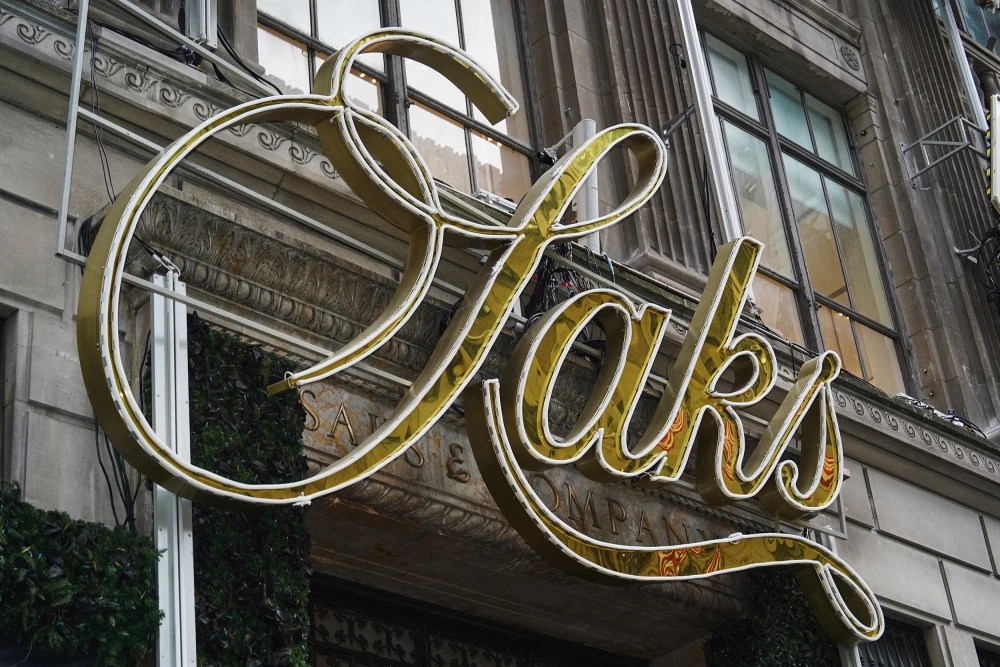
The Ribotsky Institute previously concluded that the structural weaknesses created by combining multiple struggling retailers would ultimately force Saks Fifth Avenue’s parent company to once again seek bankruptcy protection, a conclusion borne out by today’s bankruptcy filing.
The economic reality forcing the bankruptcy did not come out of nowhere. It confirmed what had already been evident to anyone paying attention to how retail actually functions in 2026. The failure was not bad timing or a temporary slowdown in consumer spending. It was the predictable result of a retail format that no longer aligns with how people shop. While Saks sits at the luxury end of the spectrum, its collapse validates a much broader truth: the traditional department store model itself is structurally broken.
Big department stores were built for a world defined by scarcity. Consumers once needed a centralized destination that aggregated brands, compared prices, and curated quality under one roof. Browsing was not incidental to the experience; it was the experience. The size of the store justified itself by encouraging discovery, cross-shopping, and impulse buying. Authority lived with the retailer, not the customer.
That world no longer exists. Modern consumers operate in an environment of constant access and constant information. Shopping now begins at home, often on a phone, long before a physical visit ever occurs. By the time a customer walks into a store, they usually know what they want, who makes it, how much it should cost, and what alternatives exist. The store is no longer a place to decide. It is a place to execute a decision that has already been made.
This shift breaks the economics of large department stores. Their size only works if customers wander, linger, and explore across categories. Modern shoppers do the opposite. They minimize time, friction, and unnecessary choice. A store designed to expose customers to hundreds of brands increasingly feels overwhelming rather than helpful. What once felt like convenience now feels inefficient.
Mass-market department stores like Macy’s demonstrate this tension clearly. Macy’s serves a broad, price-sensitive customer and has adapted better than many peers through promotions, private labels, and omnichannel fulfillment. Yet persistent traffic challenges show the limits of those adaptations. Downsizing the footprint does not resolve the underlying mismatch between a large, generalist format and a consumer who shops with precision.
The decline of JCPenney and Sears follows the same structural arc. Sears once thrived by delivering access to households that had none. JCPenney standardized apparel and home goods for a middle class with limited choice. When access became universal and choice became infinite, their core value proposition disappeared. These businesses did not fail because consumers vanished. They failed because the problem they were built to solve no longer existed.
E-commerce did not kill department stores by itself. It rewired expectations. Consumers learned to search, filter, compare, and decide quickly. Physical retail that does not respect that mindset feels dated. Large stores optimized for wandering and browsing feel disconnected from how people allocate time and attention.
Even when customers enter physical stores today, their purpose has changed. Visits are shorter and more intentional. Shoppers come to pick up an online order, try on a specific item, or handle a return. The store functions as a service node rather than a discovery engine. That shift is devastating for a model built on high fixed costs, broad inventory exposure, and long dwell times.
Attempts to reinvent big department stores often misdiagnose the problem. Adding restaurants, pop-ups, or experiential elements does not address the core issue. Experiences succeed when they are the destination. In department stores, they are usually appendages meant to justify square footage that retail sales no longer support.
Generational behavior reinforces the decline. Younger consumers did not grow up relying on department stores as default shopping destinations. They associate them with inefficiency rather than aspiration or convenience. Habits formed around mobile commerce, social discovery, and direct-to-brand relationships are not easily reversed by marketing or store redesigns.
What replaces the department store is not a single format but a fragmented ecosystem aligned to intent. Fast and cheap moves to marketplaces and off-price retailers. Essentials move to mass merchants and subscriptions. Premium products move directly to brands or to tightly curated specialty stores. The massive generalist in the middle has little role to play.
Big department stores were built for a time when access was limited, information was scarce, and shopping itself was an activity. None of those conditions exist anymore. What remains is a retail format optimized for behavior that has largely disappeared.
This is why store closures, restructurings, and bankruptcies keep repeating no matter how often the model is “reimagined.” The problem is not execution. It is alignment. A format designed around wandering cannot survive in a world organized around intention.
Retail did not die. Spending did not vanish. What ended was the need for a massive intermediary between consumers and what they already know they want. Big department stores are not victims of disruption; they are artifacts of a different era, slowly giving way to formats that match how people actually live, decide, and buy today.
While older generations may still visit a department store to “browse” that does not keep the stores operating. Lets say what no one wants to say, the large department store is already finished. It has outlived the behavior that once justified its size, cost, and role. What remains are leases, brands, and balance sheets operating on inertia rather than demand. The ending has already happened. No one simply bothered to announce it.
 RibotskyInstitute.com
Leave a comment