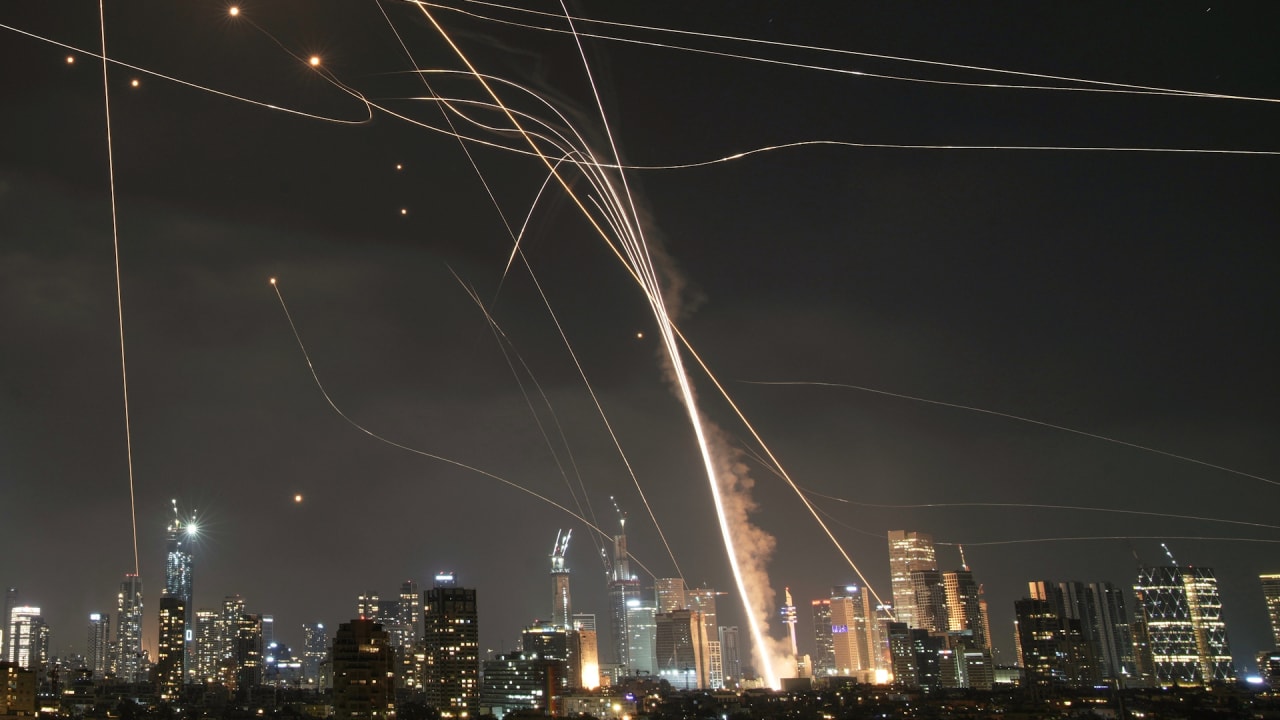
For years, much of the international community has spoken about Iran in careful, measured language. Statements are drafted to call for “restraint on all sides.” Resolutions emphasize dialogue. Governments publicly balance their words so as not to inflame tensions.
But when Iranian missiles struck American bases in the Gulf and killed at least six United States service members, something became impossible to soften with diplomatic phrasing.
This is not a regime that stumbles into escalation. It chooses it.
The late Ayatollah Ali Khamenei understood something fundamental: Iran could never defeat the United States or Israel in a conventional war. It could not match their air power, naval strength, intelligence networks, or technological superiority. In a direct military confrontation, Iran would lose decisively.
So he built a different strategy.
If Iran could not win conventionally, it would change the nature of the fight. If it were attacked, it would not respond narrowly. It would widen the battlefield. It would strike beyond its borders. It would pull in neighboring states. It would touch American forces. It would make energy markets tremble and shipping lanes uncertain. It would ensure that no conflict with Iran remained contained.
That doctrine did not die with him. It was embedded in military planning, institutionalized in command structures, and now executed in practice.
To Western observers, this approach appears reckless. Killing American soldiers does not weaken Washington; it strengthens resolve. Expanding conflict does not isolate Israel; it reinforces alliances. Targeting Gulf states does not fracture coalitions; it drives them closer together.
But the point of the strategy was never admiration. It was leverage.
Iran’s leadership believed that widening war would create fear of further escalation. It believed that instability would pressure governments into recalculating their support for military action. It believed that raising the cost would eventually force restraint from its adversaries.
Whether that calculation succeeds is one question.
The larger question is what happens if such a doctrine is paired with nuclear capability.
This is the issue many governments speak about cautiously in public but analyze bluntly in private. A state that demonstrates willingness to escalate regionally, to strike foreign bases directly, and to accept broader instability as a tool of policy is fundamentally different from a state that merely defends its borders.
Nuclear capability does not simply deter invasion. It alters every future confrontation. It shields aggressive doctrine. It complicates response. It raises the cost of stopping escalation.
A government that already shows comfort with widening conflict would operate very differently if protected by the ultimate deterrent. That is why the stakes extend far beyond one region.
Energy markets are global. Military alliances are global. Shipping lanes are global. Deterrence is global. What happens in one theater does not remain there.
The deaths of six American service members are tragic on their own. They are also revealing. They show that escalation was not accidental. It was intentional.
This is why the world cannot pretend that the issue is merely regional politics or another cyclical Middle Eastern confrontation. It is about whether a doctrine built on deliberate expansion of conflict can ever be allowed to mature under nuclear protection.
Governments may disagree on tactics. They may debate timing. They may criticize strikes or question strategy.
But beneath those debates lies a shared understanding: the risk is not abstract.
Because a country willing to escalate without restraint would be willing to take everyone else with it — and the world cannot allow that.
Leave a Reply