What a Night at a Sporting Event Says About Attention, Courtesy, and a Generation More Interested in Being Seen Than Seeing
By Corey Ribotsky
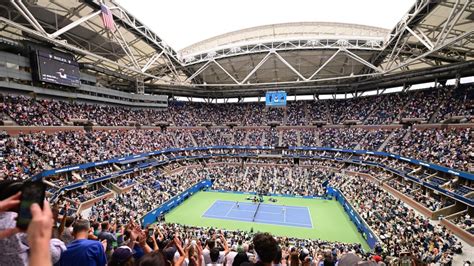
I am writing this while sitting at a sporting event. Like everyone else here, we paid for a seat because we came to watch the game. So did the people sitting in front of me. So did the people sitting behind me. At least, I thought that was why everyone was here. After watching the crowd around me, I am no longer entirely sure.
I have spent almost as much time watching people wander around the stadium as I have watching the athletes on the field. They come into the section, leave, come back, stand, sit briefly, stand again, go for food, return with food, leave for drinks, stop in the aisle, stare at their phones, look for friends, take pictures, pose for pictures and leave again. What many of them seem remarkably uninterested in doing is the one thing everyone is supposedly doing here, sitting down and watching the game.
At least from where I am sitting, this seems particularly prevalent among younger spectators. And it made me wonder whether what I am watching is about something much larger than stadium etiquette. Have we become so focused on ourselves, our phones, our immediate wants and how our lives appear to everyone else that we are losing awareness of the actual people around us?
Start with something incredibly simple. The person sitting behind you did not merely pay for a seat. They paid to watch the game. Their ticket did not purchase the privilege of staring at the back of your shirt while you stand in front of them. They did not pay to watch you return with Chicken Fingers and Fries during an important play, repeatedly stand up so you can make another trip through the row, or pose for the perfect photograph while the thing everyone supposedly came to see is happening behind you.
When you stand in front of another spectator, walk through that person’s line of sight or repeatedly force an entire row to accommodate your movement, you are taking a small piece of an experience somebody else purchased. Maybe it is only ten seconds. Maybe it is thirty. Maybe they missed only one play. But why should your thirty seconds automatically be more important than theirs?
There was once a basic social instinct that caused people to ask, “Will what I am about to do unnecessarily inconvenience somebody else?” Increasingly, the question seems to have become, “Am I allowed to do this?” Of course you are allowed to stand up, leave, come back, take photographs or get food whenever you want. But the fact that you can do something does not mean you should do it at that particular moment. That distinction is consideration, and consideration is one of the most basic forms of respect.
Then there is the apparently monumental intellectual challenge of locating one’s assigned stadium seat. A ticket contains three pieces of information: a section, a row and a seat number. This should not rank among humanity’s more difficult puzzles. Yet watching people attempt it tonight has been extraordinary.
They enter the section with a look of complete bewilderment. They stare at the phone, look at the seats, go back to the phone, look up, look down, consult one another and eventually head up into the section. A few minutes later, they came back down wearing exactly the same bewildered expression they had when they went up. Another consultation follows, then another examination of the phone, and finally comes the revelation: apparently, they are supposed to be on the other side.
If I had a dime for every person I have watched tonight go up into this section, come back down looking completely bewildered, and then walk around to the other side, I would never have to work again.
At some point, you begin to wonder whether stadium seating should be used as an intelligence test. Give someone a ticket, give them a section and see whether they can find the seat. But perhaps intelligence isn’t really the issue. The same person apparently defeated by Row 14 can operate a sophisticated smartphone, purchase an electronic ticket, navigate to the stadium, operate several social-media platforms, and take, edit, filter, caption and distribute a photograph instantaneously.
More remarkably, they can find exactly the right location for the perfect Instagram ready picture. They can find the backdrop. They can find the lighting. They can find the angle. They just can’t seem to find their seats.
Maybe the problem isn’t intelligence. Maybe it is attention.
For some people, particularly among a generation raised with social media, the stadium no longer seems primarily to be a destination. It has become a backdrop. The game is happening, but the photograph proves you were at the game—and sometimes the photograph appears more important than the game itself.
Watch how much effort goes into it. Take a picture. Check it. Take another. Different angle. Turn around. Move over. Try again. Meanwhile, the event they paid to attend is taking place directly behind them.
We have reached a strange point where documenting an experience can seem more important than actually experiencing it. The objective is no longer simply, “I am here.” It is, “Everyone else needs to know that I am here.”
Perhaps that explains something else I cannot stop noticing: they never sit.
Why come if you’re not going to watch?
People spend substantial amounts of money on tickets. They travel to the stadium, deal with traffic, wait in lines, buy expensive food and drinks and devote several hours to being there. Then some seem incapable of sitting still long enough to watch the event. They are up, down, out, back, on the phone, taking a picture, walking around, returning, standing again and leaving again.
At some point, what exactly did you buy the ticket for? You do not seem particularly interested in the seat, and you do not seem particularly interested in the game.
Perhaps increasingly we are not buying admission to an experience. We are buying the ability to say, “I was there.” But being physically present and actually being “present” are very different things.
A person can stand in a stadium surrounded by 40,000 people while psychologically existing somewhere else entirely. They are communicating with people who aren’t there, posting for people who aren’t there, taking photographs for people who aren’t there and checking reactions from people who aren’t there. Meanwhile, the actual human being three feet behind them is trying to see the game.
That may be one of the strangest contradictions of the social-media age: we have become extraordinarily conscious of how we appear to people who aren’t there while becoming increasingly unconscious of how our behavior affects the people who are right in front of us. Or more specifically the people that have been inconvenienced by droves of strangers standing in front of them not knowing where their seats are and seeming completely devoid of the concept that their standing in front of people trying to actually enjoy the event is disrespectful.
And maybe the issue underneath all of this is attention. Attention is one of the simplest forms of respect. When someone speaks, we look at them. When someone performs, we watch. When we enter a shared space, we notice the people around us. Giving something our attention implicitly says that it matters enough for us to stop thinking exclusively about ourselves for a moment.
That brings us to another group in the stadium who seem almost forgotten in all this: the athletes.
These athletes have often spent most of their lives developing the abilities we paid money to witness. Years of training, practice, competition, injury, discipline and sacrifice have produced a level of performance sufficiently exceptional that thousands of strangers purchased tickets to see it.
There is something beautifully straightforward about that relationship: They perform. We watch them compete for the chance to achieve the greatness their sacrifice gave them the ability to do. Or at least that is what it is supposed to do, if we are actually paying attention to the event in the first place.
Imagine attending a Broadway show and spending half of it wandering around the theater, staring at your phone, walking in front of other patrons and posing for photographs. We would immediately recognize that as disrespectful to the performers, the audience and the experience itself. Why should exceptional athletic performance deserve less respect?
There is something strange about paying substantial money to witness extraordinary human performance and then spending much of that performance wandering around the building. Sometimes respect means something as simple as paying attention.
And respect for others is connected to something else we may be losing: self-control. I do not have to satisfy every impulse immediately. I can wait thirty seconds until the play ends before getting up. I can wait for a break before returning to my seat. I can put my phone away. I can say “excuse me.” I can figure out where I am going before standing in front of people in the first row of a section who are clearly watching the event or making an entire row stand up because I needed food. I can sit still. I can watch the game I paid to watch. I can experience something without immediately needing to prove to everyone else that I experienced it.
Most importantly, I can give my full attention to something.
It would be unfair to claim that every young person behaves this way. They do not. Older generations are perfectly capable of being rude, distracted, inconsiderate and completely incapable of locating Row 14. But it would be equally unreasonable to pretend that smartphones, social media and a culture of constant self-presentation have not changed behavior.
Younger generations have grown up in a world organized around personalization: my feed, my followers, my recommendations, my content, my image, my preferences, my experience. The digital world constantly reorganizes itself around the individual.
The physical world does not.
A stadium cannot algorithmically remove the person blocking your view. A subway car cannot personalize itself for every passenger. A sidewalk cannot rearrange itself around someone staring at a phone. And a live sporting event cannot pause because you decided you wanted another drink.
Living among other people requires accommodation. Sometimes I inconvenience myself slightly because doing so prevents me from unnecessarily inconveniencing you. Then I trust you to extend the same courtesy to me. That reciprocal bargain is not old-fashioned. It is civilization.
There is an extraordinary irony in all of this. We have access to more information than any generation in human history. The device in someone’s hand can navigate them across a continent, translate a foreign language, locate a restaurant, calculate a route and display a stadium map. Yet surrounded by signs, section numbers and numbered rows, people can still seem completely bewildered about where they are supposed to sit.
Perhaps that tells us something important: having access to information is not the same thing as being aware of your surroundings.
Technology can tell you where your seat is. It cannot make you notice the person whose view you are blocking. It can give you directions. It cannot teach you courtesy. It can photograph the game. It cannot make you appreciate watching it. It can connect you instantly with thousands of people who aren’t there. It cannot make you acknowledge the stranger sitting directly behind you who’s view you are currently blocking.
Perhaps I am reading too much into one night at a sporting event. People have always gotten lost, wandered around stadiums and annoyed the people sitting behind them. Every generation has probably complained about the manners of the generation that followed it.
But perhaps ordinary places like stadiums are exactly where broader cultural changes become visible.
A stadium is, in its own strange way, a miniature society. Tens of thousands of strangers enter one building. We sit inches apart. We share aisles, concession stands and common spaces. We come from different backgrounds and different generations, and we may even support different teams or athletes. Yet for several hours we have agreed to occupy the same space for essentially the same purpose: to watch the event.
Making that arrangement work requires remarkably little. Wait until the play ends. Sit down. Let the person behind you see. Move out of the aisle. Say “excuse me.” Look up from the phone. Figure out where you are going. Watch the game you came to watch. Respect the athletes performing it. And remember that the stranger behind you paid to watch them too.
None of this is heroic. That is exactly the point. A functioning society depends upon thousands of small acts of consideration that are so ordinary we should barely notice them. Perhaps what should concern us is that we are increasingly noticing their absence.
If that absence appears more pronounced among younger generations, simply blaming young people misses the larger question. What happens when a generation grows up surrounded by immediate gratification, constant stimulation, personalized experiences and the perpetual presentation of oneself to an invisible audience? What happens when the perfect Instagram ready photograph becomes more important than finding the seat you paid for? What happens when proving you attended the event becomes more important than watching it? And what happens when our awareness of people hundreds of miles away becomes greater than our awareness of the person sitting directly behind us?
Those questions extend far beyond a stadium.
Ultimately, respect begins with a remarkably simple realization: I am not the only person here. Someone is performing in front of me. Someone is trying to watch behind me. Someone else’s time matters. Someone else’s experience matters.
The perfect picture can wait. The post can wait. The phone can wait.
The play happening in front of you cannot.
Maybe we should spend a little less time proving to everyone else that we were there—and a little more time actually being there.
Leave a Reply